


Hydraulic Elevators
HYDRAULIC ELEVATORS
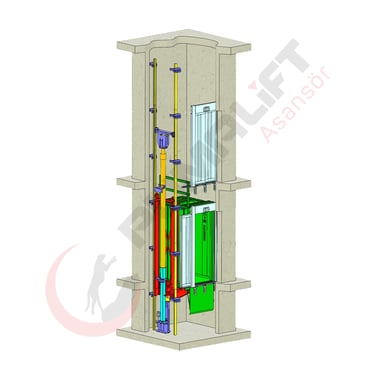
Hydraulic elevators operate on the principle of pumping hydraulic oil into a cylinder via an electric motor-driven pump to move the elevator car. Vertical movement is achieved through fluid pressure. For downward movement, the elevator car utilizes its own weight. The machine room of a hydraulic elevator is typically engineered to be located on the ground floor. This machine room houses an oil tank, the integrated hydraulic system, the control panel, and the hoses through which the hydraulic fluid passes. These systems do not require a counterweight. They are generally preferred for transporting passengers and freight in low-rise buildings between 2 to 6 floors.
Residential & Villas: Ideally preferred for low-rise residential buildings and luxury villas.
Existing & Renovation Projects: Excellent for older buildings or renovation projects, as they do not impose additional loads on the building's structural framework.
Industrial Applications: Widely utilized for heavy-duty freight elevators in factories and warehouses.
Commercial Design: Suitable for panoramic elevator applications in shopping malls.
Specialized Platforms: Frequently applied in automobile elevators and accessibility platforms.
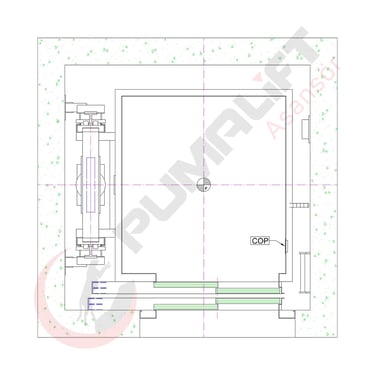
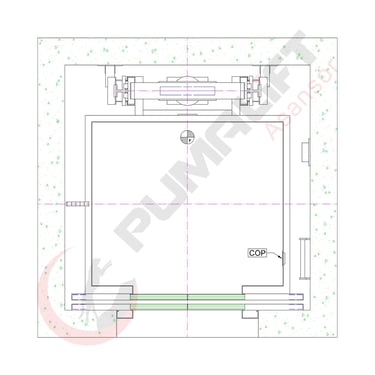
Flexible Engineering: Depending on project capacity, single or twin-piston configurations can be designed.
Drive Types: The piston can be connected to the car frame supporting the cabin either via ropes and sheaves (1/2 indirect system) or coupled directly (1/1 direct system).
Speed Profile: Rated speed is generally preferred as 0.63 m/s in hydraulic elevator applications.